

As you approach the final weeks of pregnancy, you may hear about colostrum harvesting—the gentle process of expressing and storing your first milk before your baby arrives. Many women are curious about what it is, whether it’s safe, and how it may benefit their newborn. Let’s explore this together in a way that helps you prepare for baby.
What is Colostrum?
Colostrum is the very first milk your breasts produce, it is often referred to as “liquid gold.”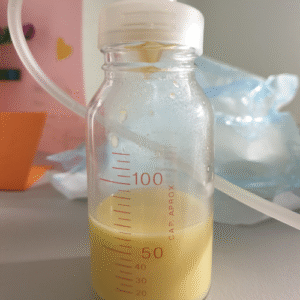
It’s usually golden-yellow, thick, and packed with immune-boosting agents, proteins, and nutrients that help protect your baby’s gut and immune system. Colostrum as the first meal of your baby lays the foundation of their body components and prepares them for a life outside the confines of your womb. Even though your breasts only make small amounts, it is perfectly tailored to meet your baby’s needs in the first few days after birth.
What is Colostrum Harvesting?
Colostrum harvesting simply means hand-expressing and collecting small amounts of colostrum during the last few weeks of pregnancy.It is recommended that you carry out this collection process from your 36th or 37th and even beyond. It’s usually done by hand rather than with a pump, and the colostrum is stored in syringes or small sterile containers, which can then be frozen and used after your baby’s birth.
Is Colostrum Harvesting Safe?
For most women, colostrum harvesting from 36–37 weeks is considered safe. However, it’s always important to check with your midwife before starting. Gentle hand expression may cause mild tightening of the womb (Braxton Hicks), but in healthy pregnancies this is generally not a concern. However, if you’ve experienced complications such as preterm labour, bleeding, or placenta problems, your midwife may advise against it.
Why Might Colostrum Harvesting Be Helpful?
While this process is not compulsory for everyone, harvesting colostrum can be very useful in certain situations, especially if:
- You want to feel more confident and prepared for breastfeeding.
- You have had problems breastfeeding after previous births.
- You’re expecting a baby who may need extra support with feeding, for example if growth has been slower.
- You have diabetes (including gestational diabetes) – as your baby may be more at risk of low blood sugar after birth.
- You have other health conditions such as multiple sclerosis and polycystic ovarian syndrome(PCOS).
- You have a strong family history of dairy intolerance or inflammatory disease.
Having a small supply of colostrum ready can mean your baby has the best possible start, even if breastfeeding is delayed or your little one needs a bit of extra help in the early hours or days.
When is it unsafe for me to harvest Colostrum?
Don’t harvest colostrum if:
- You have a history of threatened and/or actual premature labour
- You are taking a drug that may be harmful for your baby to have through your breast milk.
- You have a cervical suture (stitch)
If you feel unsure on what to do, you can ask your midwife for more information as it relates to your own specific circumstances and medical history and assessment.
How do you harvest Colostrum?
- Wash your hands thoroughly before starting.
- Use gentle massage around the breast to stimulate milk flow.
- Place your fingers and thumb in a “C-shape” around the areola, then press back towards your chest wall and gently compress.
- Drops of colostrum should begin to appear—you can collect them using a sterile syringe provided by your midwife.
- Label and freeze the syringe with the date and time of collection, ready to take with you when you go into hospital.
Your midwife or infant feeding specialist can demonstrate the technique and provide syringes or containers for collection. You can also click this link to watch this short video for a quick Tutorial on how to confidently harvest colostrum from your breasts.
Harvesting can be done as little or as frequently as you are able to do it. Frequency ranges from as low as 2 times daily to as high as 8 times daily.
What conditions are optimal for storing your harvested colostrum?
It is recommended that Colostrum is stored below room temperature. This means refrigerators and fridges are more suitable for your harvested Colostrum. The following guidelines will help you to store them in an optimal condition:
You can safely keep your expressed breastmilk at room temperature for up to 6 hours.
If you pop it in the fridge at 5–10°C, it will last around 3 days, or up to 5 days if your fridge is 4°C or lower. For longer storage, your freezer at –18°C or below will keep breastmilk fresh for as long as 6 months. Once you’ve defrosted it, though, it’s best to use it straight away and never refreeze it.
It is strongly advised that you DO NOT store it along with eggs, meat or any form of raw food.
A Gentle Word of Encouragement
For more information on hand-expressing, you can watch this Video by UNICEF UK. Remember, whether or not you harvest colostrum, your body is beautifully designed to nourish your baby. Some women collect several syringes, others only a few drops—and both are completely normal. Every drop of colostrum is valuable.
If this is something you’d like to try, reach out to your midwife for guidance. You are doing a wonderful job preparing for your baby, and colostrum harvesting is simply one more way to feel empowered on your journey into motherhood.
You’ve got this mama!!!
Keep blooming !!!