
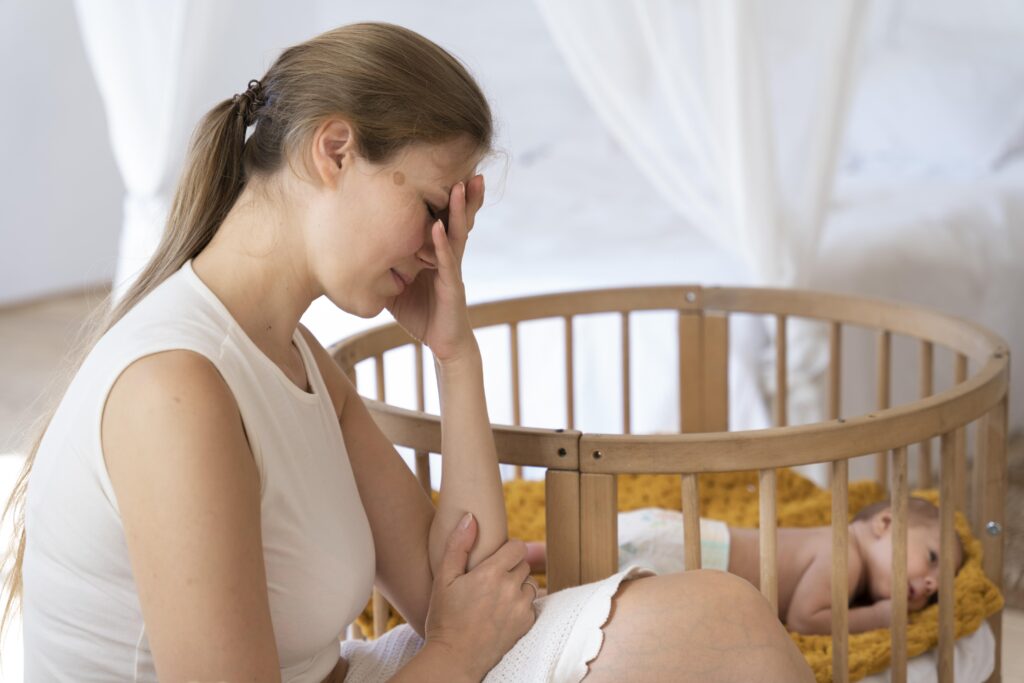
Welcoming a baby into your life is one of the most profound transitions you will ever experience. Alongside the joy and love, many new mums also encounter overwhelming emotions, exhaustion, and unexpected changes in mood. It’s important to know that this is normal—and that support is available. Your emotional and mental wellbeing matters just as much as your physical recovery.
There are different experiences that a woman can experience after childbirth that could affect her emotional wellbeing negatively. Some of them are explained below and experiencing some of the symptoms here are a huge pointer to the need for an increased investment in your emotional wellbeing.
The Baby Blues
About 8 in 10 new mothers experience the “baby blues.” This usually begins a few days after birth and can last up to two weeks.
Common signs include:
- Tearfulness without a clear reason.
- Feeling irritable or anxious.
- Struggling with sleep, even when your baby is resting.
- Mood swings that feel difficult to control.
The baby blues are linked to hormonal shifts, sleep deprivation, and the emotional adjustment of becoming a parent. With rest, support, and time, these feelings usually pass on their own.
Postnatal Depression (PND)
If low mood, sadness, or anxiety continue beyond the first couple of weeks—or appear anytime in the first year—it may be postnatal depression. PND affects about 1 in 10 mothers and can range from mild to severe.
Possible signs of PND include:
- Persistent sadness or emptiness.
- Loss of interest in things you normally enjoy.
- Difficulty bonding with your baby.
- Feeling guilty, hopeless, or overwhelmed.
- Changes in appetite or sleep patterns not explained by baby’s needs.
Postnatal depression is not your fault. With the right support—whether through your GP, health visitor, or counselling—recovery is absolutely possible.
Postnatal Psychosis
Postnatal psychosis is rare but very serious, affecting about 1 in 1,000 mothers. It usually develops within the first few days or weeks after birth and requires urgent medical attention.
Signs may include:
- Extreme confusion or rapid changes in mood.
- Hallucinations (seeing or hearing things that aren’t there).
- Strong, unusual beliefs that don’t match reality.
- Restlessness, inability to sleep, or feeling “out of touch” with reality.
If you or someone close to you notices these symptoms, seek emergency help immediately. With prompt treatment, recovery is possible, but quick action is vital.
How to improve your mental wellbeing after childbirth
Reaching out for support is a sign of strength, not weakness. Talk to your midwife, GP, or health visitor if you’re struggling emotionally, no matter how small it may seem. Trusted friends, family members, and peer support groups can also make a huge difference.
Simple steps that can help include:
- Prioritising rest when possible.
- Eating regularly and staying hydrated.
- Talking openly about your feelings.
- Accepting offers of help from loved ones.
- Simple physical activities such as dancing, yoga, gardening and walking) could increase your ‘happy hormones’ and improve your overall wellbeing.
- Mindfulness exercises such as breathing, meditation and nature walks.
- Finding creative outlets for art, journaling or cooking could help engage the mind in rejuvenating activities.
A Gentle Reminder
Motherhood brings both beauty and challenge. If you find yourself struggling, know that you are not alone, and you are not failing. Many women experience emotional changes after birth, and with support, emotional wholeness and wellness is within your reach.
Your wellbeing matters—not just for your baby, but for you. Reach out, share how you’re feeling, and allow yourself the care and compassion you deserve.
You’re doing wonderfully mama, and remember, your midwife cares about you.